
We all respond to drugs differently. As many of you have pointed out while using the coffee simulator https://janicegoh.shinyapps.io/CoffeeSimulator/ over the past few months, the profile shown there does not always accurately describe your experience with coffee. This is because while the coffee simulator describes the population average, we are all unique individuals. Our response can thus be influenced by a variety of factors, from age, gender, concomitant medication, genes etc. An emerging field that has gained prominence in recent years to help explain this variability is pharmacogenomics – the study of how changes in the genes coding for drug metabolizing enzymes and transporters can influence how much drug is absorbed and cleared. Before starting certain drugs, knowing the pharmacogenomic make up of a person is important, to ensure that they get the appropriate dose and therapy.
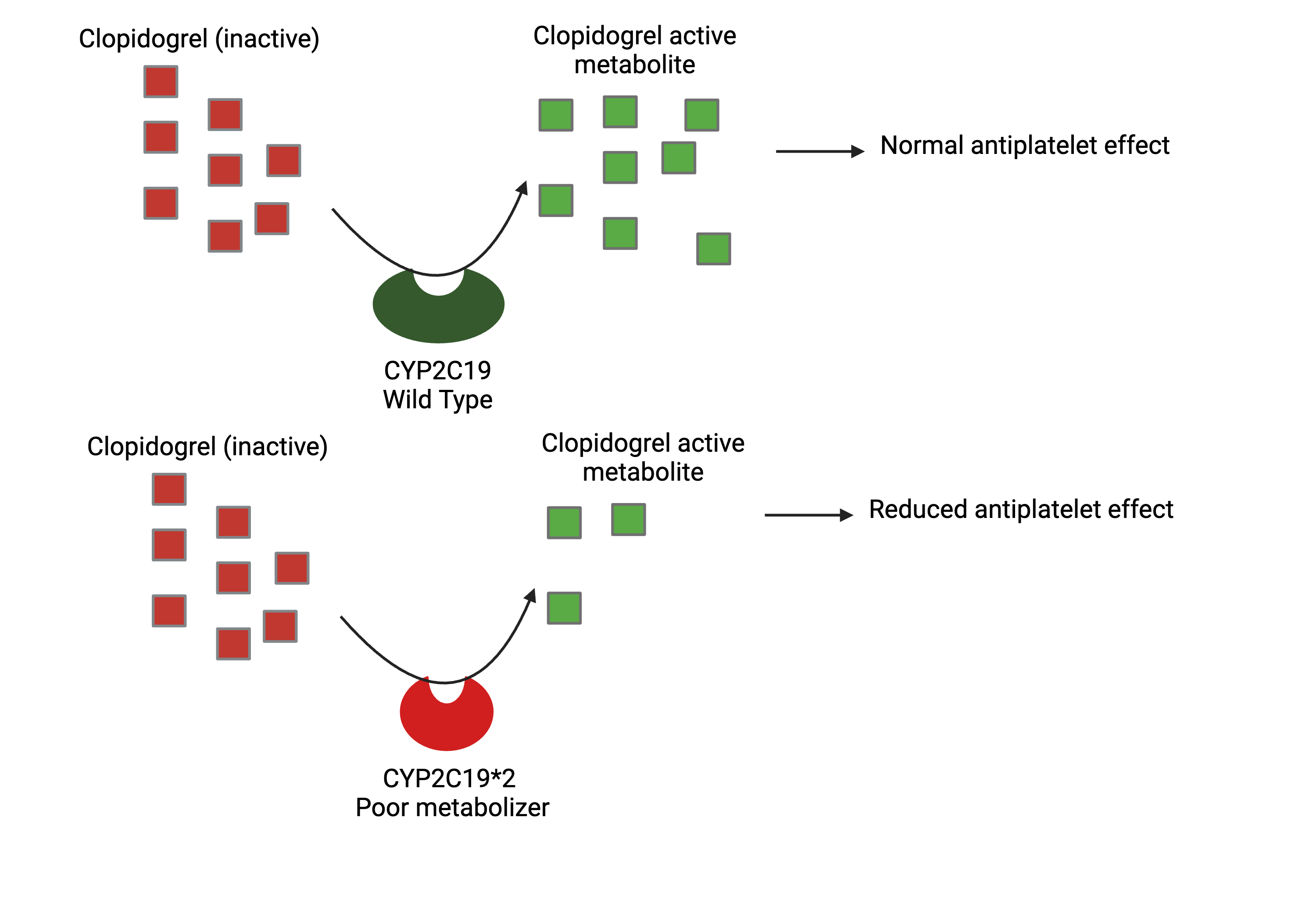
For survivors of a heart attack, it is common to be prescribed clopidogrel, an antiplatelet medication, to prevent further heart attacks. Interestingly, clopidogrel is a prodrug, which means it needs to be metabolized by drug metabolizing enzyme CYP2C19 before it can become effective. A gene coding for CYP2C19 with less activity (aka poor metabolizer) is thus bad news for patients on clopidogrel. This can pose as a problem in Singapore, as 43.8% of our population have decreased CYP2C19 function, while 13.7% have no CYP2C19 function at all (https://rdcu.be/dGZIA). Clopidogrel might thus be not as effective in preventing blood clots as we would like it to be. Per CPIC guidelines, an alternative therapy should be considered instead for people with reduced function CYP2C19 polymorphisms.
If you happen to be on this medication however, please do not stop clopidogrel because you have read this post. Please always consult your doctor/pharmacist for informed treatment decisions before deciding to start or stop a new medication.
The need for alternative therapy from clopidogrel for patients with decreased or no CYP2C19 function is just one example of how pharmacogenomics can be used to help us better tailor medications, especially here in Asia, where our genomes are still understudied.


 Singapore Pharmacometrics