
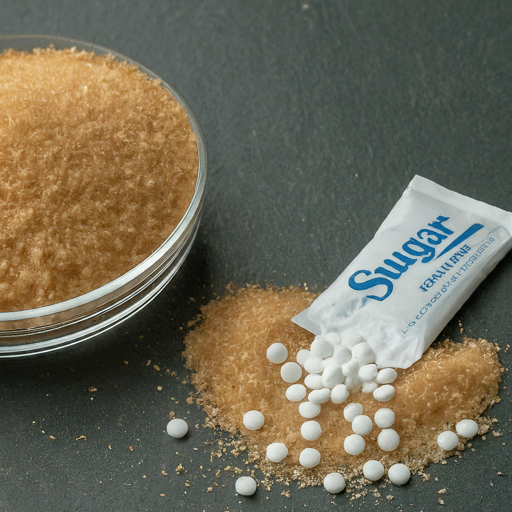
Artificial sweeteners are in the news again regarding potential new health risks. In particular, xylitol (a common artificial sugar) has been called into question as a prothrombotic (causing an increased risk of blood clots and thus stroke and heart attacks) in M. Witkowski et al.’s study https://doi.org/10.1093/eurheartj/ehae244. As a pharmacometrician, of course we need to evaluate how much xylitol is given in your standard soft drink, how much is absorbed, and for how long.
According to a 1973 dose ranging study on xylitol using 10 healthy men, (T Asano et al, PMID: 4696096) Xylitol has variable bioavailability from 49-95% with no detectable plasma concentrations 1 to 2 hours after ingestion. This suggests that while xylitol is easily absorbed into the body, it is also cleared quickly. However, just xylitol’s pharmacokinetic profile alone might not be sufficient to claim it is safe. Before we conclude, we must consider its prothrombotic mechanisms and actual incidence risk linked to its consumption.
Note: I neither strongly support the use of artificial sweeteners, nor denounce them. But I do like to drink diet coke after I spent a long time studying in the USA.
Should artificial sugars then, be designed to be less easily absorbed so we lessen this risk of toxicity? It turns out, other artificial sugars have already been designed that way. Aspartame, sucralose and steviol for example, have poor bioavailability as they get metabolized in the gut or are not well absorbed (PMID: 27753624). However, leaving these sugars in the gut can in turn cause diarrhoea and other forms of gastric discomfort as the high amounts of sugar and their metabolites in turn draw water from the intestines, making stool soft. In fact, this has become a treatment for constipation in the form of lactulose syrup, another artificial sugar that is poorly absorbed by the body.
Thus, this becomes a tricky balance in designing a sugar that is poorly absorbed by the gut, and being sweet enough that its quantity is insufficient to cause gastric discomfort.
Pharmacology concepts can be applied in food science too!


 Singapore Pharmacometrics
Loved this post – –
Have A Great Day Ahead – Melissa
ps If i May Add , My New Delicious Keto Recipes Blog Is NOW LIVE – http://www.ketodietrecipes.co.uk Please Follow & Leave A Like